ELGIN 16900687 Pocket Watch Movement 324 7J 0S
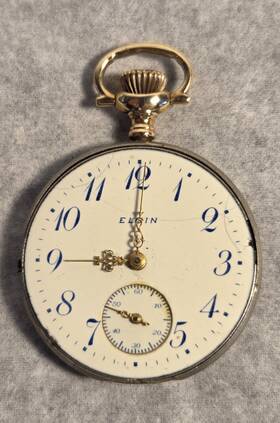
( Brand: Elgin ), ( Manufacturer Part Number: 16900687 ), ( Type: Movement ), ( Movement Type: Mechanical ), ( Country Of Origin: United States )
Review ELGIN Model Grade 324 7j 0s Pocket Watch Movement Runs
The **Elgin 16900687 1912 324 7J 0S** is a meticulously crafted pocket watch movement that embodies the timeless elegance and precision engineering of early 20th-century horology. Originating from the legendary Elgin Watch Company, one of America s most celebrated timepiece manufacturers, this **7-jewel, 17-size movement** (often referred to as the "1912" or "324" model) represents a refined blend of functionality and sophistication, designed to deliver reliable timekeeping with minimal maintenance. The movement s **7-jewel bearing system** a hallmark of its era reduces friction between the pallet stones and the escapement, enhancing durability while maintaining smooth, accurate motion. Engineered with a **lever escapement**, this mechanism ensures consistent ticking, making it ideal for both everyday wear and collector s appreciation. The **324** designation indicates its specific design, which often includes a **15-hour power reserve**, allowing the watch to remain functional even after prolonged periods of non-use. The **7J** notation further signifies its jewel count, a testament to the movement s precision and longevity, as each jewel acts as a bearing to minimize wear on critical components. This movement was commonly paired with high-quality Elgin cases, featuring intricate engravings, polished brass finishes, or even enamel dials, reflecting the brand s commitment to both artistry and mechanical excellence. Whether nestled within a classic **Elgin "American Beauty"** case or repurposed into a modern pocket watch, this movement retains its historical significance while offering a glimpse into the craftsmanship that defined American horology at its peak. For enthusiasts and collectors, the **16900687 1912 324 7J 0S** stands as a relic of a bygone era, blending heritage with the enduring allure of mechanical timekeeping.
The **Elgin 16900687 (1912-324-7J-0S)** is a vintage pocket watch movement, specifically a **7-jewel, 17-size, lever-set, automatic (self-winding) movement** produced by Elgin in the early 20th century. Below is a detailed breakdown of its pros and cons, followed by a conclusion and recommendation.
---
### **Pros of the Elgin 16900687 Movement**
1. **Historical Significance and Collectibility**
- This movement is from the **Elgin Automatic Company**, one of the most prestigious American watchmakers of the early 20th century. Elgin movements were highly regarded for their quality and innovation, particularly in the development of automatic (self-winding) mechanisms.
- The **1912-324-7J-0S** is part of Elgin s early automatic line, making it a rare and desirable piece for collectors, especially those interested in vintage American horology.
2. **Mechanical Complexity and Craftsmanship**
- The movement features a **lever-set mechanism**, which was a significant advancement over earlier fusee or stem-wind mechanisms, offering greater convenience.
- It is an **automatic (self-winding) movement**, meaning it winds itself through the motion of the wearer s wrist (when used in a wristwatch or pocket watch). This was a groundbreaking feature in the early 1900s.
- The **7-jewel bearing system** (though basic by modern standards) was an improvement over earlier movements with fewer jewels, reducing friction and improving longevity.
3. **Potential for Restoration and Repurposing**
- Many Elgin movements, including this one, can be **restored to working order** by a skilled watchmaker. If the movement is in poor condition, a restoration could bring it back to functionality, adding value.
- It can be **reused in a vintage or modern case**, either as a pocket watch or (with modifications) as a wristwatch. Some enthusiasts repurpose Elgin movements into **custom wristwatch builds**, which can be highly rewarding.
4. **Nostalgia and Aesthetic Appeal**
- For those who appreciate **vintage industrial design**, Elgin movements have a distinct charm. The brass, steel, and intricate gearwork evoke a bygone era of mechanical engineering.
- Owning a piece of horological history can be personally satisfying, especially for hobbyists or collectors who enjoy the story behind their timepieces.
5. **Potential Investment Value**
- Well-preserved or restored Elgin automatic movements, particularly those from the early 20th century, can appreciate in value over time, especially if demand for vintage American movements continues to grow.
- If the movement is **rare or in excellent condition**, it may attract collectors willing to pay a premium.
---
### **Cons of the Elgin 16900687 Movement**
1. **Age and Wear**
- This movement is **over a century old**, meaning it likely shows signs of wear, including **rust, pitting, or worn gears**. Even if it was once functional, it may require **significant restoration work** to return to working order.
- The **automatic mechanism** may be stiff or unreliable due to decades of disuse, requiring lubrication, cleaning, and potential part replacements.
2. **Limited Availability of Parts and Expertise**
- Finding a **qualified watchmaker** with experience in restoring vintage Elgin automatic movements can be challenging. Many modern watchmakers specialize in Swiss or Japanese movements, not American vintage ones.
- **Replacement parts** (such as hairsprings, pallet stones, or gears) may be difficult to source. While some parts can be machined or fabricated, others may require **custom fabrication**, increasing costs.
3. **Functional Limitations**
- The **7-jewel bearing system** is far less precise than modern movements, which often use **15 jewels** and synthetic sapphires. This means the movement may **lose time more quickly** (typically **10-30 seconds per day** if not wound regularly).
- The **lever-set mechanism** is less convenient than modern pushers or crown-set mechanisms, as it requires more dexterity to operate.
- The **automatic winding** may not be as efficient as modern rotor systems, meaning it might not wind as consistently or quickly.
4. **Cost of Restoration vs. Value**
- Restoring this movement to full functionality can be **expensive**. Costs may include:- **Disassembly, cleaning, and lubrication** (if the movement is heavily rusted).
- **Replacement of worn parts** (such as the hairspring, pallet stones, or escape wheel).
- **Regulating and timing adjustments** to ensure accuracy.
- If the movement is **beyond repair**, the cost of restoration may exceed its **potential resale value**, making it a poor investment.
5. **Ethical and Practical Considerations**
- Some collectors and enthusiasts argue that **restoring vintage movements** contributes to the preservation of horological history, while others believe it is better to **leave them in their original state** for museums or archives.
- If you are not committed to **long-term maintenance**, a vintage movement like this may become a **liability** rather than an asset, as it requires regular attention to stay functional.
6. **Modern Alternatives May Be More Practical**
- If your primary goal is **accuracy and convenience**, modern **Swiss, Japanese, or Chinese movements** (such as ETA, Seiko, or Miyota) offer **superior precision, reliability, and ease of repair**.
- For **wristwatch use**, many modern automatic movements are **smaller, lighter, and more efficient** than early 20th-century designs.
---
### **Conclusion**
The **Elgin 16900687 (1912-324-7J-0S)** is a fascinating piece of horological history with **high collectible and nostalgic value**, particularly for enthusiasts of vintage American watchmaking. It represents an **important milestone in the development of automatic movements**, making it a desirable acquisition for collectors.
However, it is **not a practical choice for everyday use** due to its **age, potential wear, and functional limitations**. Restoring it to working order can be **costly and time-consuming**, and even then, it may not match the **accuracy and reliability** of modern movements. If your goal is **functionality over history**, a vintage Elgin movement may frustrate rather than delight.
That said, if you are **passionate about vintage watches, mechanical restoration, or American horology**, this movement could be a **rewarding project**. It offers the chance to **learn about early automatic mechanisms, engage in restoration work, and own a piece of timekeeping history**.
---
### **Recommendation**
1. **If you are a collector or hobbyist:**- **Proceed with caution.** Assess the movement s condition carefully (preferably with a watchmaker s inspection) before committing.
- If it is **restorable**, consider investing in its repair, but be prepared for **potential ongoing maintenance costs**.
- Pair it with a **vintage case** (pocket watch or wristwatch) that complements its era, or repurpose it into a **custom wristwatch build** if you enjoy mechanical modifications.
2. **If you seek a functional timepiece:**- **Avoid this movement for daily use.** Instead, consider a **modern automatic movement** (e.g., ETA 2824, Seiko 6R15, or Miyota 9015) for reliability and accuracy.
- If you want a **vintage automatic**, look for **better-preserved or more recent Elgin movements** (e.g., later 1920s-1930s models) that may be easier to restore.
3. **If you are unsure:**- **Research further** by consulting vintage watch forums (e.g., WatchUse, Vintage Watch Forum) or connecting with **Elgin movement specialists**.
- Consider **bidding cautiously** at auctions (e.g., eBay, Heritage Auctions) and **inspecting the movement in person** if possible before purchasing.
Ultimately, the **Elgin 16900687 is best suited for those who appreciate its historical significance and are willing to invest time and effort into its restoration**. For most practical purposes, modern alternatives remain the better choice.
Details:
Manufacturer: Elgin. Estimated Production Year: 1912. Run Quantity: 2,000.
part #: 16900687 price
- $34.88
specifications movementparpar:
- brand: Elgin
- mpn: 16900687
- type: Movement
- movement type: Mechanical
- country of origin: United States
shipping movementparpar:
- type: Calculated
- transit: 3-8 Days
- service: FedEx Ground Economy
- carrier: FedEx
- class: Economy
- cost: $6.83
returns movementparpar:
- paid by: Seller
- time: 30 Days
- method: Money back
- policy: Returns Accepted
payments movementparpar:
- credit card: Visa
- other
- wallet: Google-pay
general movementparpar:
- condition: Pre-owned
- Parts, Tools Guides > Parts > Movements
seller movementparpar:
- # reviews: 4668
- city: Street, Maryland
- rating: 99.9%
offer movementparpar:
- availability: In Stock
- sold: 0
- options: Ship-to-home
- quantity: 1
- started: June 9, 2026
- best offers: True
Elgin 16900687 Is Similar To:
- 10-0 Grade 447 Elgin 1918 (30.9% similar) This is a parts movement, but any one piece would cost more than what I'm selling the whole movement for. Buyer pays return shipping...(March 15th, 2017)
- 10209373 Elgin Parts Antique Watch Pocket Movement (41% similar) Items sold as found. This will all come to you in the antique tin the parts have been kept in as shown. Items have not been cleaned and will leave that to the lucky winner. As well as more gears, clogs and great crafting and repair watch parts. Please examine the photos. Craft or repair parts. ...(July 2nd, 2015)
- Filled 682 Prices 17 10kt Movement Watch Elgin Vintage Deluxe Jewel Wrist Gold (30.7% similar) Vintage Elgin deluxe 10KT gold filled 17 jewel 682 movement wrist watch vintage 10K gold filled Elgin deluxe wrist watch. The white dial is in good shape, and the original crystal shows some scratches. The 17 jewel 686 movement will set, but does not run due to a broken balance wheel watch is in ...(May 28th, 2015)
- 119240028 Vintage Natl Elgin Movement Pinion Safety Watch (24.4% similar) Id AC141533 store. Estate offer vintage lot of vintage Elgin natl watch co...(August 3rd, 2015)
- 12006652 Elgin Gm Wheeler Pw Movement Finger Bridge Jewels (33.8% similar) ...(June 17th, 2019)
- 12345 Hamilton Mechanical Pocket Wrist Watch Movements Parts Elgin Bulova More (38.7% similar) Great lot for repair. Many of these movements still tick. 49 mechanical pocket wrist watch movements parts Hamilton Elgin Bolivar more lot includes mens and women's. Thanks and enjoy. Lots of Hamilton Bolivar Elgin movements. Also included are some cases and a watch fob...(May 14th, 2018)
- 1275687 Elgin Pocketwatch Jewel Antique Runs Well Size Finger Bridge Gold (35.9% similar) Elgin pocket watch 17 jewel model 3 runs great. This high quality timepiece was manufactured in. The enamel face has no hairlines, second hand is sunken, ex to read roman numerals. Easy to wind and set of course is accurate. It has recently been serviced. Yes it comes from a smoke-free environment. ...(November 4th, 2018)
- 12size Repair Open Parts Balance Elgin Face Watch Good Movement Pocket (35.2% similar) The movement appears to be complete no dial or hands and the balance moves freely. After 60 years of collecting various things. It probably only needs cleaning and oiling to run I have decided it's time to start un collecting. This offer is for an Elgin, 12 size, 17 jewel, open face pocket watch ...(September 16th, 2015)
- 1327741 Elgin Jewels Bichsel Bros Sedalia Mo Pocket Watch Movement For (49.3% similar) Elgin 15J 15 jewels birches bros Somalia mo pocket watch movement for parts or repair. Please see photos for more details on condition. Estate find, missing crown not sure if it runs, selling for parts or repair. Movement measures approx. 29MM across...(March 4th, 2019)
- Watch 13585644 Elgin 5 Partial Movement Jewel (34.2% similar) What's in the picture is what I'm selling...(July 31st, 2015)
- 13953809 Elgin Size Watch Movement Jewels Model Grade (38.4% similar) We ask that you please look at all photos and read closely before buying. This item is in good pre owned condition. Communication: we ask that you please first before opening a case with. The dial has a hairline crack at 9 and 12 o'clock. Condition: the movement does run. Please review all photos ...(March 25th, 2019)